


 Create Account
The Bottom Line
- Sports fans are active, engaged, and shopping across multiple screens all season long, making them one of the most valuable audiences a programmatic advertiser can target.
- With the right mix of ad formats, precise timing, and impression-level tracking, brands can follow fans from their first exposure all the way to checkout.
Sports and advertising have always gone hand in hand. But the game has changed: today’s sports fans aren’t sitting in one place, glued to one screen. They’re bouncing between their TV, their phone, and their tablet, often within the same commercial break. That kind of fragmented attention used to be a headache for advertisers. With the right programmatic sports advertising strategy, it’s actually an opportunity. Here’s how to follow fans from their first ad exposure all the way to checkout.
Sports Season is Always Around the Corner
The sports calendar never really stops, but the NFL season is the undisputed peak for fan engagement and ad spend. During fall, brands selling jerseys, apparel, snacks, subscriptions, and gear see some of their highest purchase intent numbers of the year. The Super Bowl alone consistently pulls over 100 million viewers.
Yes, connected TV (CTV) costs more in the fall. Cost per thousand impressions (CPM) rates will be elevated across the board. But the return on investment justifies the spend, especially for brands that start building their audience before the season kicks off. Brands that ramp up campaigns early see stronger brand recall once fans are in peak buying mode. If you wait until Week 1 to get your campaigns live, you’ve already lost ground.


The Second Screen Has Become Standard
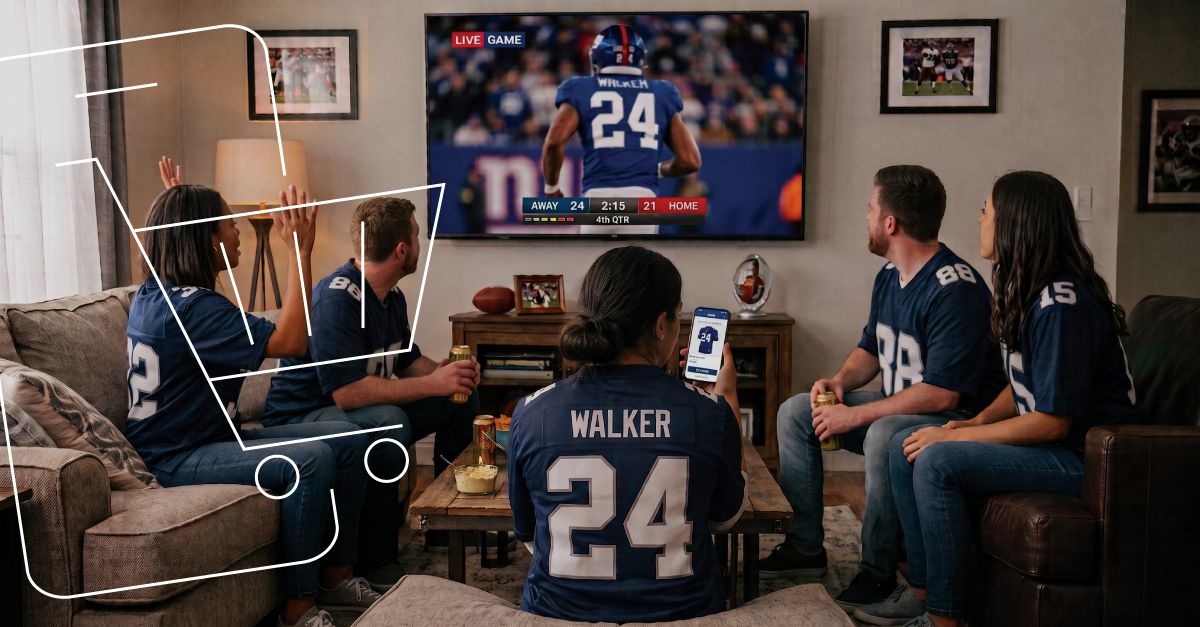
Over 80% of sports viewers use a second device while watching, most often a phone or tablet. While the game plays on TV, fans are checking stats, scrolling through social feeds, chatting with friends, and yes, shopping. That distraction may seem like an obstacle, but smart advertisers can turn it into a buying window.
A fan who sees a jersey ad during a commercial break and then gets a retargeted display ad on their phone ten minutes later is far more likely to convert than one who only saw the TV spot. That kind of cross-device continuity is exactly what programmatic sports advertising is built for. At Genius Monkey, we’ve been running device-agnostic campaigns since 2011, connecting CTV impressions to mobile and desktop touchpoints in a single, unified strategy.


The Ad Formats that Speak to Sports Fans
Not every ad format performs equally for sports audiences. Here’s what works and why:
- CTV and streaming ads are getting more valuable every season. As more fans cut the cord and stream games on services like Peacock, ESPN+, and Amazon Prime Video, CTV inventory is where the premium audience lives. CTV ads also can’t be skipped on most platforms, which means your creative actually gets seen.
- Display and native ads catch fans mid-scroll on sports news sites, score-tracking apps, and social feeds. These work best as a secondary touchpoint after a fan has already been introduced to your brand.
- Audio ads reach fans who are listening to sports radio or podcasts during their commute or while they’re working. It’s a captive audience that’s already in a sports mindset.
- Video pre-roll is worth noting for younger fans in particular. Around 60% of Gen Z sports fans prefer to consume sports content through highlight reels and recaps rather than live broadcasts. Pre-roll ads placed before those clips are a direct line to that segment.
The format matters, but the timing matters more. You need a platform that can reach the right fan on the right device at the right moment in their journey.
Mapping the Sports Fan Journey
A programmatic sports advertising strategy isn’t just about placing ads. It’s about understanding what your customer does between their first impression and their purchase decision.
A typical sports fan journey looks something like this:
- A fan sees a CTV ad for your brand during a game broadcast
- They get curious and search your product on their phone
- They browse, maybe add something to their cart
- They get distracted and close the tab
- They forget about it entirely
That abandoned cart isn’t necessarily a failure. It’s a signal that tells you that the fan was interested, and that’s something you can work with.


Genius Monkey’s impression-level tracking gives advertisers visibility into every touchpoint in that journey, from the first ad exposure through to purchase. When you can see the whole funnel, you know where people are dropping off and you can do something about it.
How to Win Back Abandoned Carts Through Retargeting
Retargeting is the practice of reaching back out to fans who’ve already interacted with your brand but didn’t follow through. Done right, it’s one of the highest-return tactics in sports advertising.
A few retargeting approaches that work well for sports audiences:
- Dynamic product ads that show the exact item a fan left in their cart. No guessing, no generic creative. Just a direct reminder of what they were already considering.
- Time-sensitive messaging tied to the sports calendar. Shipping cutoffs before game day, limited-edition drops, or playoff-window offers all create urgency that’s genuinely relevant.
- Sequential creative that adjusts based on how far into the funnel the fan has gotten. Someone who bounced from your homepage gets different messaging than someone who abandoned a cart with three items in it.


By looking at the full funnel, you can figure out not only that someone left, but why. That information is invaluable for building the right message to bring them back.
Timing is Everything in Sports Advertising
During peak sports season, the window between a fan’s first brand exposure and their purchase decision can close fast. Game-day urgency is real, and so is the competition for their attention and wallet.
If you’re trying to get campaigns built and retargeting flows set up in the middle of the regular season, you’re already behind. The brands that see the best results are the ones with their full programmatic structure in place before the season starts. That means audience segments are ready, creative is approved, and retargeting sequences are queued up for the moment purchase intent spikes.


The earlier you start, the more data you collect, and the better your campaign performs as the season heats up.
From Screen to Cart with Genius Monkey
Sports fans are engaged, motivated, and multi-screen by habit. They’re exactly the kind of audience programmatic advertising is built to follow.
With our fully managed programmatic advertising platform, you get impression-level tracking across every screen, device-agnostic targeting that connects CTV to mobile to desktop. The Genius Monkey team has been doing this long enough to know what works in sports advertising and what doesn’t. Our platform builds your campaigns alongside your own efforts, supported by both human expertise and machine learning.
If you’re ready to build your strategy before the next season kicks off, get in touch with Genius Monkey today!